
What to Wear in Italy in Summer: Light, Elegant, and Made for Walking

For Italy in summer, wear a midi or knee length dress in a breathable fabric, flat or low block heel shoes you can walk miles in, and a light layer that covers your shoulders for churches. Our summer dresses start at $695 for the Navy Wrap Dress, Olga and the Floral Elegant Midi Dress, Amanda, and the travel pieces start at $325 for the Black Travel Pants, Teodora.
Every piece is made in our Pozarevac atelier, US orders ship free in 2 to 5 days, and returns are accepted for 30 days with no questions asked. You can browse the full Summer collection before you pack.
In Italy in summer, wear breathable fabrics in a midi length that moves over cobblestones, with a flat or low block heel and a light layer for churches that require covered shoulders and knees. The Olga Wrap Dress in Navy is defined and easy to move in. For the wider packing logic, see the European summer formula.
Shop the pieces in this story: Dresses, Winter Coats, and Pants. Complete size runs are listed first.
Step 1: Prioritize walkable elegance
Italy is walked, not driven, and the cobblestones are real. Every choice should pass the walking test first. A midi dress that grazes mid-calf moves better over uneven stone than a long maxi that catches, and a refined flat or low block heel will carry you through a day that a delicate stiletto cannot survive. The Olga Wrap Dress in Navy is an ideal Italian-summer dress — defined, easy to move in, and quietly elegant in a café or a piazza. Start the trip from the Summer edit and choose for the feet first.

Step 2: Choose breathable fabrics for heat and stone streets
Italian cities hold heat in their stone, and the afternoons are warm well into the evening. Choose fabrics that breathe and recover so you stay cool and uncreased through a long day of sitting and walking — a refined viscose, a technical satin, or a structured cotton over pure linen, which creases the moment you sit at a café. A floral pattern like the Amanda Elegant Midi Dress in Floral Print hides the day's wear better than a solid. Lighter colors also read cooler in strong Italian light and photograph beautifully against terracotta and stone.

Step 3: Cover shoulders for churches and museums
This is the rule travelers most often forget: Italy's churches and many religious sites enforce a covered-shoulder, covered-knee dress code, and you will be turned away without it. The elegant solution is not a scarf stuffed in a bag but a light layer you are already carrying. A Linea Belted Midi Coat in Ivory or a fine cardigan slips on at the door and comes off in the sun, and it doubles as your evening and air-conditioning layer. Plan the cover-up as part of the outfit, not an afterthought, and you move through the Duomo and the trattoria without a wardrobe crisis.

Step 4: Dress up slightly for the evening passeggiata
The Italian evening has its own rhythm — the passeggiata, the slow walk and the long dinner — and Italians dress a notch up for it. You do not need a different wardrobe, only a small lift: swap the flat for a low heel, add the light coat or a considered piece of jewelry, choose a slightly more defined dress. The same midi that walked the city by day reads as dinner-appropriate at night with these small shifts. Our guide to the Italian coastal dressing covers the more formal end if your trip includes an event.
Step 5: Pack light and mix
Italy punishes overpacking — there are stairs, no elevators in old buildings, and trains to catch. Bring a tight, mixable capsule: two or three dresses, one pair of tailored travel pants such as the Teodora Travel Pants in Black, a couple of tops, one light coat, and two pairs of walkable shoes in a palette where everything combines. A Lola Pleated Skirt in Navy and White earns its place by reading differently with each top. Build it from The Essentials and our ten-piece travel capsule guide.

A note on regions
Italy is not one climate. The northern lakes and hill towns are cooler in the evening and reward the light coat; Rome and the south are hotter and drier, pushing you toward the lightest dresses; the coast and the islands add sea breeze and boats, which means securable hems and flat shoes. Adjust the same capsule by leaning lighter as you go south and adding the layer as you go north or to the water. For coastal and resort specifics, our resort wear guide and resort dresses guide carry the detail.

What to avoid in Italy
A few choices mark a visitor and undercut comfort. Avoid brand-new white sneakers and athletic gear as daywear; Italians dress with more intention even casually. Avoid bare shoulders if churches are on the itinerary. Avoid heels you cannot walk in, and avoid pure linen if you mind creasing, because you will be sitting often. And avoid overpacking — the elegance of Italian dressing is in repetition done well, not in a different outfit every day.
The Italian summer formula
Walkable elegance, breathing fabrics, covered shoulders when the church calls, a small evening lift, and a tight mixable capsule. Tune the master formula this way and Italy becomes effortless — you will look like you belong in the piazza rather than like you packed for it. For the city-by-city versions elsewhere, see Greece and the South of France.
City by city
Italy is many climates and many registers in one country, and the same capsule shifts emphasis as you move. Rome is hot, dry, and full of walking and covered-shoulder sites, so lean to the lightest dresses with the light layer always in your bag. Florence is similarly walkable and church-dense, rewarding refined flats and modest necklines. Venice adds water, bridges, and constant steps, where securable hems and flat shoes matter more than anywhere. The Amalfi Coast and the lakes are warmer, more relaxed, and more resort in register — easy dresses, flat sandals, and a touch more color suit the setting. You do not need a different wardrobe for each; you simply lean lighter and more relaxed toward the coast and more covered and walkable in the cities.
The constant across all of them is the Italian preference for looking considered even when casual. Wherever you are in Italy, the local standard is a notch more intentional than the tourist default, and matching it is the difference between blending in and standing out as a visitor.
The aperitivo and the long dinner
The Italian evening is a ritual, and dressing for it is part of the pleasure. The aperitivo — the early-evening drink and small bites — is when the city dresses and gathers, and it sets a slightly elevated tone that carries through to a dinner that often starts after eight and lasts for hours. You do not need to overthink it: the daytime dress, refreshed with the low heel, the light coat over the shoulders, and a piece of jewelry, is exactly right. The mistake is under-dressing for the evening out of travel fatigue, arriving in daytime sightseeing mode while everyone around you has shifted up a register. The small evening lift is what keeps you in step with the rhythm of the place.
Accessories for Italy
Italian accessorizing favors quality over quantity. A good leather bag worn cross-body for hands-free walking, one excellent pair of sunglasses, and a single piece of jewelry do more than a rotating set of statement pieces. A light scarf earns its place doubly — as a shoulder cover for churches and as a finishing layer for a cool evening. Keep the metals and the jewelry consistent across the trip so everything coordinates, and let the bag and the shoes, rather than loud jewelry, carry the polish. The look you are after is quietly put-together, not heavily decorated.
Dressing for the Italian afternoon heat
The hottest hours in an Italian city run from early afternoon into the early evening, when the stone holds the day's heat and the sun is high. This is when fabric choice repays itself most: a breathable, recovering cloth in a lighter color keeps you cool and uncreased through lunch and the walk after it, while a heavy or dark fabric turns the same hours into an ordeal. Many Italians simply slow down in these hours — a long lunch, a pause in the shade — and dressing for that rhythm rather than against it is part of the trick. A sleeveless or short-sleeved midi in a fluid fabric, with the light layer carried rather than worn, is the afternoon uniform. Save the layer for the cooler church interiors and the evening, and let the dress breathe through the heat of the day.
Hydration and sun aside, the wardrobe lesson is to dress for the peak heat as the default and add for everything cooler, rather than the reverse. If your base outfit is comfortable at two in the afternoon in July, it will be comfortable everywhere else with the simple addition of the layer.
Dressing for specific Italian settings
A single Italian trip can include settings that each ask for something slightly different. For churches and religious sites, covered shoulders and knees are required, so the light layer and a midi length do the work. For fine dining and the evening, lift the outfit with a heel, the coat, and jewelry. For the coast and beach clubs, an easy dress over swimwear with flat sandals suits the relaxed register, though many beach clubs themselves are surprisingly stylish, so a refined cover-up beats a casual one. For boats and the islands, securable hems and flat, grippy shoes matter most. The same small capsule flexes across all of these with changes of shoe, layer, and accessory rather than changes of outfit.
The unifying thread is that Italy rewards looking considered in every setting, from the church to the beach club. Matching the register of each place, rather than defaulting to one outfit everywhere, is what separates the traveler who looks at home from the one who looks like they are passing through.
A week in Italy: what to pack
For a week of Italian summer, a tight capsule covers everything: three light dresses in a coordinated palette, one pair of tailored travel pants, two or three tops that work with the pants and layer under or over the dresses, one pleated or easy skirt for variety, the single light coat, and two pairs of shoes — a refined walking flat and a low evening heel. Add a cross-body leather bag, one structured tote, sunglasses, a light scarf that doubles as a shoulder cover, and minimal coordinated jewelry. That is roughly ten to twelve pieces producing a different considered outfit every day, with the light layer and the accessories doing the work of making repeats invisible. Everything fits a carry-on, which matters more in Italy than almost anywhere given the stairs, the trains, and the absence of elevators in old buildings.
Looking fresh in the heat
Staying composed through an Italian summer day is partly wardrobe and partly habit. Breathable, recovering fabrics keep an outfit looking fresh long after a heavier cloth would have wilted, and a lighter color disguises the day's wear better than a stark one. Beyond the clothes, a few small habits help: hair worn up or back stays neat and keeps the neck cool, a light scarf can refresh an outfit that has been worn since morning, and a midday pause in the shade — the Italian way — resets both you and the outfit before the evening. The goal is not to fight the heat but to dress and move so that it never shows, arriving at dinner looking as considered as you did at breakfast.
This is also an argument for the day-to-night strategy over a midday change. Rather than returning to wilt and re-dress, the woman who chose the right fabric in the morning simply refreshes her finishing in the evening and carries on, fresher for having trusted the wardrobe to do the work.
Day trips and changing terrain
Italian trips rarely stay in one place. A city base often leads to a day in the countryside, a vineyard, a lake, or a coastal town, each with its own terrain and register. The wardrobe handles this through the same flexibility that serves the cities: an easy dress and a walkable flat cover a vineyard or a hill town, the light layer handles a breezy lake or a cool evening return, and securable hems suit a boat or a windy overlook. The key is to dress for the most active and variable part of the day rather than its most relaxed, so a spontaneous climb to a viewpoint or a walk through a vineyard never catches you in the wrong shoes. Pack for movement and the day trips take care of themselves.
Early versus late summer in Italy
Italian summer is not one temperature. June is warm but gentler, with comfortable evenings that welcome the light layer and the occasional cool day. July and August are genuinely hot, especially in the cities, pushing the wardrobe toward the lightest dresses and the breathable fabrics, with the layer reserved for interiors and the rare cool night. If you travel in the high heat of August, lean harder on linen blends and the airiest viscose and plan your days around the cooler hours; if you travel in June or September, you will use the light coat more and welcome a slightly more substantial dress in the evening. The same capsule covers both — you simply weight it lighter for the peak of summer and add the layer back as the shoulders of the season approach.
What to wear to dinner in Italy
Dinner is the most dressed moment of the Italian day, and it pays to get it right. The register is smart but rarely formal: a defined dress, a low heel, the light coat or a fine layer for the cooler night, and one considered accessory will be at home at almost any trattoria or ristorante. Italians lean toward looking polished rather than casual in the evening, so this is the time to trade the daytime flat for the heel and to add the finishing the daytime outfit went without. A jumpsuit or a refined midi in an evening-leaning fabric works equally well. The one thing to avoid is arriving in visible sightseeing mode (shorts, athletic shoes, a sun-creased daytime look) when the room around you has shifted up a register. The small evening lift is all it takes to be exactly right.
Frequently asked questions
What do you wear in Italy in summer?
Light, breathable dresses you can walk in, refined flat or low-heel shoes, covered shoulders for churches, and one light layer for evening and cool interiors.
Is there a dress code for churches in Italy?
Yes. Most churches require covered shoulders and knees, so carry a light coat or cardigan you can slip on at the door.
Are sneakers okay in Italy?
Athletic sneakers as daywear mark you as a visitor; a refined flat is more comfortable on cobblestones and more in keeping with how Italians dress.
What shoes are best for walking Italian cities?
A refined flat or a low block heel you can walk miles in; save delicate heels for a seated dinner, not the walk there.
How dressy is the Italian evening?
A notch up from daytime. The same dress with a low heel, a light coat, and a piece of jewelry is enough for the passeggiata and dinner.
Shop the edit
Handmade in Europe in limited runs. A few pieces from our collection that suit this look:
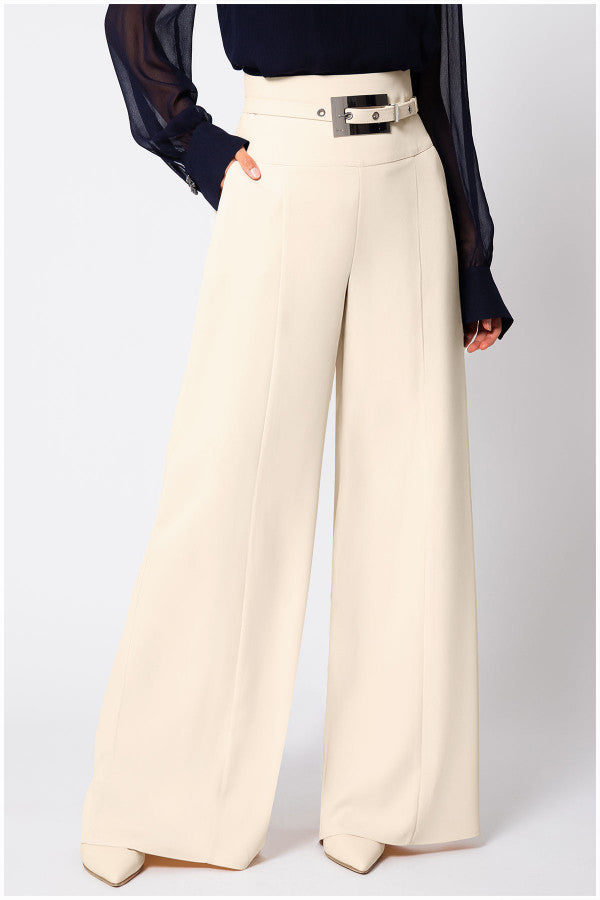
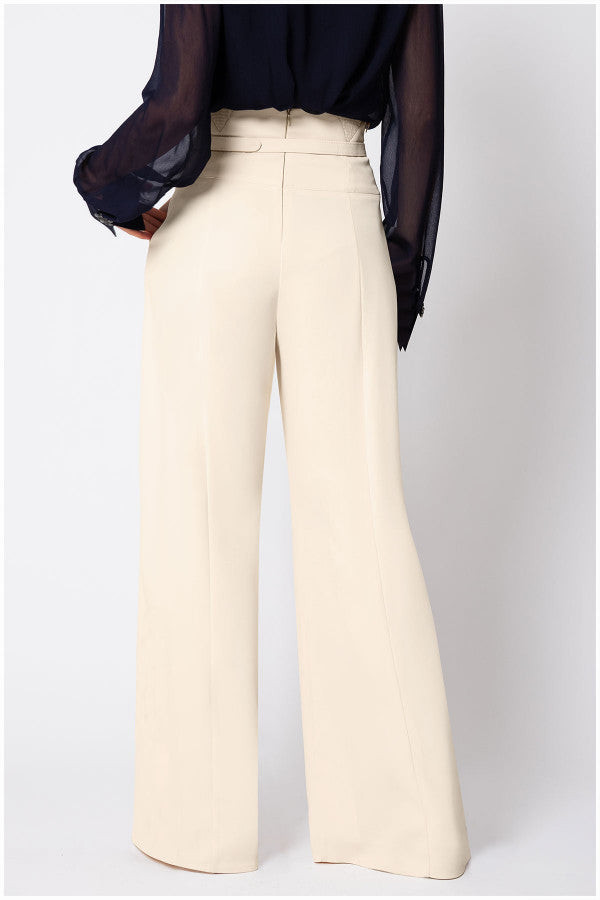
- Ivory High Waisted Wide Leg Pants, Agatha — $595
- Silver Floral Jacquard Light Coat, Emma — $880
- Teal Floral Jacquard Light Coat, Emma — $880

Explore more
Continue with our Summer collection, or read What to Wear in Greece in Summer: Light, Clean, and Designed for Heat, Dressing for a European Summer: A Field Guide to Light, Defined, Movement-Ready Style and What to Wear in the South of France in Summer: Soft, Refined, and Effortless.

Italy in summer at a glance
This table gives the short answer for each place a summer trip usually takes you.
| Where you are | What to wear | What to carry |
|---|---|---|
| Churches, the Vatican and religious sites | Shoulders and knees covered | A scarf or light layer to slip on at the door |
| Walking tours and museums | A midi or knee length dress, flat shoes | A cross-body bag so both hands stay free |
| Aperitivo and dinner | A defined dress and a low heel | A light coat for the cooler hour after dark |
| Coast, lakes and boats | An easy dress with a securable hem, flat sandals | A cover-up that looks finished |
| Travel days | Soft pants with an elastic waist | One layer that works with everything |
How hot Italy gets and what that means for fabric
In July and August the average daytime high in Rome and Florence is about 88 to 90 degrees Fahrenheit, and heat waves push it past 95. June and September are milder, with highs in the low to mid 80s and cooler evenings. Stone streets hold the heat well into the evening, so the fabric matters more than the style.
Pick a fabric that breathes and recovers from sitting. The Amanda is sleeveless and fully lined, in a breathable botanical fiber, at $695. The Olga has short sleeves and sits at the knee, which keeps the shoulders covered at a church door without a second layer. Dark navy hides a long day of walking better than white does.
The church and Vatican dress code, step by step
Churches across Italy, including the Vatican Museums and Saint Peter Basilica, expect covered shoulders and covered knees from every visitor. Staff at the door do turn people away. Here is how to be ready without changing outfits mid-day.
- Choose a dress with sleeves, such as the Olga, or carry a layer for a sleeveless one.
- Pack the Floral Silk Scarf, Loretta at $225. It is a long, sheer silk scarf that drapes across both shoulders and weighs almost nothing in a bag.
- Check the hem before you leave the hotel. A knee length or midi hem passes at most doors.
- Put the layer on before you reach the door, so the line does not hold you up.
Shoes for cobblestones and stairs
Old Italian streets are uneven stone, and many hotels and apartments have stairs and no elevator. A flat or a low block heel with a closed back is the safest choice for a day of walking. Keep a thin heel for the table, not the walk to it. Plan on 2 pairs for a week, one flat for the day and one low heel for the evening.
Small local rules that affect your outfit
Venice asks visitors not to walk through the city in swimwear, and many Italian beach towns ask the same. A dress over swimwear for the beach club, then a change before you walk into town, keeps you on the right side of local custom. The Dresses collection has the easy midis that work for both.
A 7 day packing list for Italy in summer
| Piece | Luna example | Price |
|---|---|---|
| Wrap dress with sleeves | Olga in navy | $695 |
| Sleeveless floral midi | Amanda | $695 |
| Pleated knee length skirt | Lola in navy and white | $325 |
| Travel trousers | Teodora in black | $325 |
| Shoulder cover | Loretta silk scarf | $225 |
| Light layer for evenings | Linea belted midi coat, a technical polyester that recovers from a suitcase | $770 |
The Lola has a knife-pleated body in navy with a white band at the hem, and it lands at the knee, so it passes at church doors. The Teodora has a straight, tapered leg that finishes at the ankle, which makes it a good airport to dinner pant. For more skirts and pants, see the Skirts and Pants collections, and for lightweight outer layers see Light Coats.
What should I wear in Italy in summer?
Wear a midi or knee length dress in a breathable fabric, flat or low block heel shoes, and a light layer or scarf for churches. The Navy Wrap Dress, Olga, at $695 has short sleeves and a knee length hem, so it already meets the church rule.
Can I wear shorts or a sleeveless dress in Italy?
You can wear both in the street. Churches and the Vatican expect covered shoulders and knees, so carry a scarf or light layer for a sleeveless dress and choose a hem at the knee or below.
What colors are best for Italy in summer?
Navy, ivory and soft floral prints read cool in strong light and hide a day of walking. Pale colors show creases and dark colors hold heat, so a mid-tone or a print is the practical middle.
How many outfits do I need for a week in Italy?
Plan on 2 or 3 dresses, 1 skirt, 1 pair of pants, 1 light layer and 2 pairs of shoes. That covers 7 days when the layer and the accessories change the look.
Do I need a jacket in Italy in summer?
You need a light layer for evenings, air-conditioned interiors and church doors. A scarf covers the shoulders, and a light coat handles cooler nights in June and September.