
What to Wear in Greece in Summer: Light, Clean, and Designed for Heat

For Greece in summer, wear the lightest dress you own in a breathable fabric, a flat sandal that grips stone steps and a cover-up for your shoulders at churches and monasteries. The Navy Wrap Dress, Olga is $695, and the Black Red Floral Maxi Dress, Rina is $770.
Every piece is made in our Pozarevac atelier. US orders ship free in 2 to 5 days, and returns are accepted for 30 days with no questions asked. Start with the Summer collection and the Dresses collection when you plan the packing.

Greece in summer calls for the lightest dress you own, a fabric that handles sun and sea air, and shoes that manage stone steps and boat decks. Below, the European summer formula is adapted for Greek heat and terrain, from Athens to the islands.
Shop the pieces in this story: Dresses, Winter Coats, and Pants. Complete size runs are listed first.
Step 1: Start with the lightest possible dress
In Greek heat, the dress is again the answer, and it should be the lightest, airiest version you own. A loose-but-defined midi keeps air moving against the skin while holding enough shape to look intentional. A floral A-line such as the Rina Red Floral Maxi Dress in Black moves with the sea breeze, while a Olga Wrap Dress in Navy gives a defined waist without a heavy waistband. Light colors reflect the strong sun and read cool against whitewashed walls and blue water. Begin from the Summer edit and choose for airflow above all.

Step 2: Choose fabrics for strong sun and sea air
The Greek combination of intense sun and salt air asks for breathable fabrics that also resist the limpness humidity brings. A refined viscose or a technical-blend cloth breathes and recovers where heavy fabrics cling and pure cotton can wilt by midday. Avoid anything that needs ironing on the road — the recovery test matters even more here, because you will be in and out of the water and the wind. Lighter, cooler tones also keep you more comfortable in direct sun than dark colors, which absorb the heat.

Step 3: Plan for islands, boats, and uneven ground
Greece is steps, stone, sand, and the occasional boat. Hems should be securable in wind — a dress that billows charmingly on a terrace becomes a problem on a ferry deck — and shoes should handle both marble-smooth old streets and rough harbor stone. A refined flat sandal is the workhorse; save any heel for a still terrace dinner, not a walk to it. Pack a dress you can move and climb in, because the best views in Greece are usually at the top of something.
Step 4: Add sun protection that still looks composed
Sun protection is not separate from the outfit in Greece — it is part of it. A wide-brim hat, good sunglasses, and a light cover-up for the shoulders do real work against a strong sun, and chosen well they elevate the look rather than interrupting it. A light layer like the Linea Belted Midi Coat in Ivory doubles as a shoulder cover for sites, a wrap for a breezy evening, and protection from the cooler air on the water. Treat the hat and the cover-up as styling, not just function, and they finish the outfit.

Step 5: Move from beach to taverna with one change
The Greek day often runs straight from the water to a late dinner without a return home, so build outfits that transition with a single swap. A light dress worn over swimwear by day becomes dinner-ready by trading the flat sandal for a low heel, adding the light layer, and a piece of jewelry. This is the same day-to-evening logic that makes the European-summer dress so efficient; our guide to light summer dresses that hold their shape covers fabrics that survive that transition without wilting.
Islands versus the mainland
Athens and the mainland sites are hot, dry, and full of walking and covered-shoulder requirements at ancient and religious sites, so carry the light cover-up and wear walkable shoes. The islands add wind, water, and a more relaxed register — flat sandals, securable hems, and easy dresses dominate. The same small capsule covers both; you simply lean more covered and walkable on the mainland and lighter and easier on the islands. For the resort end of island dressing, see our resort wear guide.
What to avoid in Greece
Avoid heavy or dark fabrics that absorb the sun and cling in humidity. Avoid maxi hems you cannot secure on a windy deck. Avoid heels on the islands, where the ground rarely cooperates. Avoid forgetting the shoulder cover for the ancient and religious sites. And avoid over-thinking it — Greece rewards the simplest, lightest, cleanest version of an outfit, not the most elaborate.
The Greek summer formula
The lightest dress you own, sun-and-sea fabrics, securable hems and flat shoes, composed sun protection, and a one-change beach-to-taverna outfit. Tune the master formula this way and Greece is effortless — cool in the heat, steady on the ferry, and ready for a late dinner by the water. For the rest of the cluster, see Italy and the South of France.
The islands and their different paces
Greece is not one register; the islands themselves vary. The cosmopolitan islands lean a touch more dressed in the evenings, where a refined dress and a low heel are at home for dinner; the quieter, more rugged islands stay relaxed all day, where easy dresses and flat sandals are all you need. Athens and the mainland sit apart again — hotter, drier, and dense with ancient and religious sites that enforce covered shoulders and knees, which makes the light cover-up essential rather than optional. The same small capsule covers all of it; you simply lean a little more dressed on the lively islands and a little more covered in the city, and stay easiest of all on the quiet islands.
Whatever the island, the Greek standard is relaxed and unfussy. Over-styling reads as out of place against the simplicity of whitewashed walls and blue water; the most at-home look is almost always the lightest, cleanest, simplest version of an outfit.
Ferries, boats, and water days
Greece involves more time on the water than most trips, and water days have their own rules. Wind on a ferry deck or a day boat turns a billowing maxi into a constant problem, so choose hems you can secure or dresses that fall closer to the body. Salt air and spray ask for fabrics that dry quickly and resist limpness. Flat, grippy sandals matter on wet decks and slippery harbor stone, where a heel is genuinely unsafe. And a light cover-up earns its place again here against the cooler air and stronger sun on open water. Pack the water days into your thinking from the start, because they shape the wardrobe as much as the heat does.
Accessories and sun in Greece
In Greece, sun protection and accessorizing are the same act. A wide-brim hat shields the face and finishes an outfit; good sunglasses are non-negotiable against the glare off white walls and water; a light cover-up serves as both shoulder protection and evening layer. Beyond those functional pieces, keep jewelry minimal and salt-resistant — the simplicity suits the setting, and delicate pieces fare badly around sand and sea. The Greek look is clean and uncluttered, where the hat and the sunglasses do most of the styling work and everything else stays quiet.
Dressing for Greek heat through the day
Greek summer heat is dry and intense, and the day has a rhythm you can dress to. Mornings and late afternoons are for moving (sightseeing, walking, the beach), when the lightest dress and good sun protection carry you comfortably. The fierce midday hours are for slowing down, often with a long lunch in the shade or time by the water, when an easy dress over swimwear is all you need. Evenings cool pleasantly, especially near the sea, and this is when the light layer and a small lift turn the day dress into dinner. Dressing to this rhythm rather than fighting it keeps you cool when it matters and composed when it counts, and it is exactly how Greeks themselves move through a summer day.
The wardrobe implication is that almost everything you wear should work over or alongside swimwear and transition with one change, because the Greek day flows between sun, sea, and table without much ceremony. Build for that flow and the heat stops being something to endure.
Swimwear and the cover-up
In Greece more than most places, swimwear and the cover-up are part of the daytime wardrobe rather than separate from it. A light dress that goes straight over a swimsuit lets you move from a morning swim to a beachside lunch to a wander through town without changing, which is the easy, unfussy way the islands are actually lived. Choose cover-ups that read as real dresses rather than transparent throwaways, so the same piece works walking into a taverna as it does on the sand. A kaftan or a fluid midi in a fabric that dries quickly and resists salt is ideal. The cover-up that looks intentional, not improvised, is what keeps the beach-to-town transition elegant.
Footwear follows the same logic: a flat sandal that handles sand, stone, and a wet deck equally is more useful than a beautiful pair that fails on any one of them. One excellent, versatile sandal beats three specialized ones in a Greek suitcase.
A week in Greece: what to pack
A week of Greek summer needs even less than most trips. Pack three or four very light dresses, at least one of which doubles as a swimsuit cover-up, a swimsuit or two, one easy skirt or pair of light pants, a couple of simple tops, the one light layer for sites and evenings, and a single pair of versatile flat sandals plus a low heel only if dressier island dinners are planned. Add a wide-brim hat, good sunglasses, a light scarf or cover-up for the shoulders, a beach-to-town tote, and minimal salt-resistant jewelry. Keep the palette light and tonal so everything mixes and the repeats disappear. The Greek lesson is that the lightest, simplest, most versatile packing is also the most elegant — the islands reward ease, not abundance.
White and color in Greek light
Greek light is famously strong and clear, and it flatters a particular palette. White and soft neutrals read crisp and cool against whitewashed walls and deep blue water, which is why they feel so at home on the islands and photograph so beautifully there. Light, sun-reflecting colors keep you cooler than dark ones in the direct heat, and they suit the relaxed simplicity of the setting. Where color earns its place is as a single clear accent — a blue that echoes the sea, a warm coral, a soft green — against the neutral base. Busy prints and heavy dark colors fight both the light and the heat. Dress to the light rather than against it, and even the simplest outfit looks considered.
This is part of why Greek summer dressing can be so minimal and still so elegant. The setting does so much of the work that the wardrobe only has to stay light, clean, and out of its own way. A white dress, good sunglasses, and a hat is a complete look in Greece in a way it would not be in a grayer place.
Evenings on the islands
Island evenings are the moment the Greek wardrobe lifts, and they call for dressing up. As the heat softens and the light turns gold, the islands come alive with dinners that stretch late and a register a notch above the daytime ease. The same light dress that spent the day near the water becomes evening-appropriate with a low heel, the light layer against the sea breeze, and a piece of jewelry. On the livelier islands, a slightly more refined dress earns its place for a sunset dinner or a harbor-side evening. The transition asks for nothing more than the finishing pieces you are already carrying, which is exactly why the beach-to-taverna dress is the engine of a Greek summer wardrobe.
Practical fabrics for a Greek trip
Greece tests fabric harder than most destinations, between strong sun, salt air, sand, and frequent contact with water, so the practical qualities of a cloth matter as much as how it looks. Favor fabrics that dry quickly, resist the limpness humidity brings, and shake out their creases overnight, since you will be in and out of the sea and rarely near an iron. Quick-drying, recovering blends earn their place; delicate fabrics that crush, stain, or wilt do not. The same goes for color and finish — a fabric that hides the day's wear and a light tone that reflects the sun will keep you looking fresh long after a fussier choice has given up. Choosing for these practical qualities is not a compromise on elegance; on a Greek trip it is what makes elegance last through the day.
A final practical note: pack one or two pieces you would not mind getting a little salt or sand on, so you are never protecting a precious outfit instead of enjoying the water. The most useful Greek wardrobe is one you can actually live in, beach and all.
Dressing respectfully at monasteries and churches
Greece's monasteries and churches, many of them active and centuries old, hold the strictest dress codes you will meet on the trip, and they are enforced. Covered shoulders and knees are the baseline, and some monasteries require a skirt rather than pants, often providing a wrap at the entrance for visitors who arrive unprepared. The graceful solution is to plan for it: a midi-length dress with the light layer over the shoulders meets most requirements without a scramble, and carrying the layer means you are never turned away or left improvising. Approaching these sites dressed with a little modesty is also simply respectful of places that remain in religious use. A small amount of forethought here lets you move through the most beautiful and sacred sites in Greece without a wardrobe obstacle at the door.
Frequently asked questions
What should I wear in Greece in summer?
The lightest dresses you own in breathable fabrics, flat sandals for stone and boats, securable hems for the wind, and composed sun protection.
What fabrics handle Greek heat best?
Refined viscose and technical blends that breathe and resist the limpness of humidity, in lighter colors that reflect the strong sun.
What shoes are best for the Greek islands?
Refined flat sandals that handle stone steps, sand, and boat decks; heels rarely cooperate with island terrain.
How do I dress for both ancient sites and the beach?
Carry a light shoulder cover for the covered-shoulder rule at ancient and religious sites, and lean to easy, securable dresses on the islands.
How do I go from beach to dinner in Greece?
Wear a light dress over swimwear by day, then trade the sandal for a low heel and add a light layer and jewelry for a late taverna dinner.
Shop the edit
Handmade in Europe in limited runs. A few pieces from our collection that suit this look:
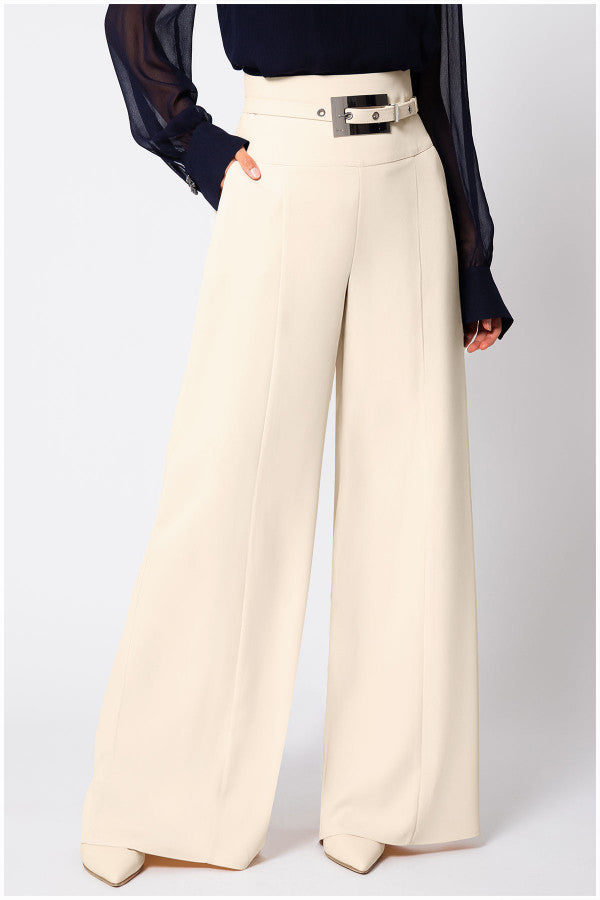
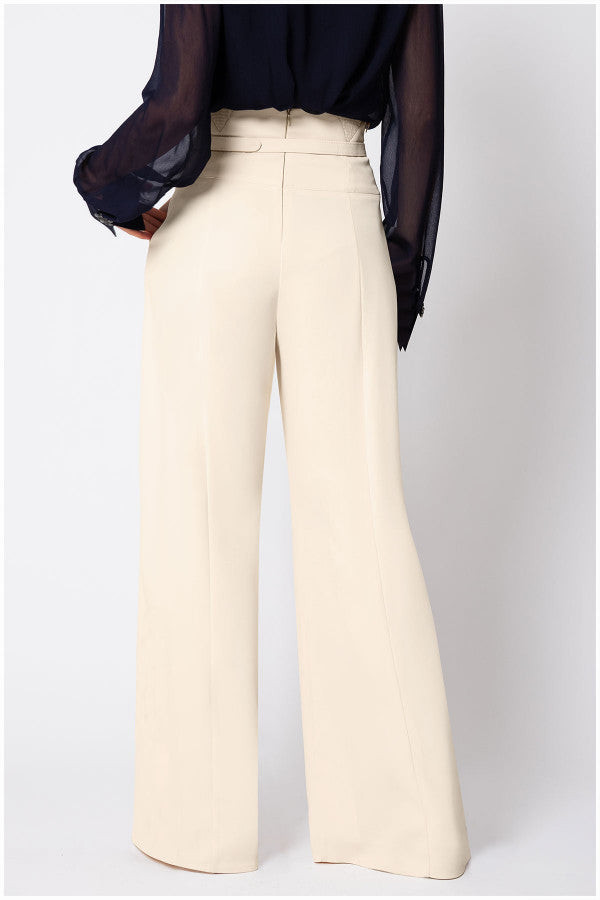
- Ivory High Waisted Wide Leg Pants, Agatha — $595
- Silver Floral Jacquard Light Coat, Emma — $880
- Teal Floral Jacquard Light Coat, Emma — $880

Explore more
Continue with our Summer collection, or read Dressing for a European Summer: A Field Guide to Light, Defined, Movement-Ready Style, What to Wear in Italy in Summer: Light, Elegant, and Made for Walking and What to Wear in the South of France in Summer: Soft, Refined, and Effortless.

More questions we hear before a summer trip
What color dress is coolest in Greek sun?
Light and mid tones reflect more sun than black or deep colors, so soft neutrals and prints read cooler. Navy, as in the Olga, still works for an evening on the islands, when the heat has dropped.
Can I wear a long dress on a ferry or boat?
You can, if the hem is easy to gather in wind. Hold a long skirt in one hand on the boarding ramp, or choose a midi length such as the Navy Wrap Dress, Olga, which sits at the knee.