
Dressing for a European Summer: A Field Guide to Light, Defined, Movement-Ready Style

For a European summer, pack 2 or 3 dresses in fabrics that breathe and recover, one pair of soft pants, one light layer and flat shoes you can walk miles in. The Navy Wrap Dress, Olga and the Floral Elegant Midi Dress, Amanda are $695 each, and the Navy Travel Pants, Teodora are $325.
Every piece is made in our Pozarevac atelier. US orders ship free in 2 to 5 days, and returns are accepted for 30 days with no questions asked. You can see everything we have for the season in the Summer collection before you book the suitcase.

Dressing for a European summer means light clothes that hold their shape from a morning on narrow streets to a dinner that starts after 8. You rarely get back to change, so the outfit has to survive the heat and still look put together. The basic formula follows, with separate guides for Italy, Greece, and the South of France.
Shop the pieces in this story: Dresses, Pants, and Bags. Complete size runs are listed first.
The principle underneath all of it is simple: light should never mean shapeless. The mistake most travelers make is equating heat with surrender — loose, washed-out, easy clothes that read as tired by the afternoon. The European approach keeps the lightness but keeps the line. Follow the six steps below and you will pack less, decide faster each morning, and look composed from the first café to the last course.
Step 1: Build around the dress
The single garment that solves a European summer is the dress, because it is a complete outfit with one decision. A wrap or A-line midi gives you shape without a waistband to manage in the heat, and it reads as considered in a way separates rarely do at the end of a long day. The Olga Wrap Dress in Navy is the archetype — a defined waist, short sleeves, and a length that works for both walking and dinner. For pattern, a floral midi such as the Amanda Elegant Midi Dress in Floral Print hides the day's creases better than a solid. Build the trip around two or three dresses and you have most of your outfits before you add a single separate. Start from the Dresses collection and the Summer edit.

Step 2: Choose fabrics that breathe and recover
Fabric does more work than silhouette in the heat. Look for two qualities: airflow and recovery. Airflow keeps you cool; recovery is the fabric's ability to shed wrinkles and return to shape after sitting, packing, and a warm afternoon. A refined viscose blend, a technical satin, or a structured cotton all breathe while holding their line, where pure linen breathes beautifully but creases the moment you sit. If you love linen, accept the creases as part of its character or blend it with something that recovers. The test before you pack anything: scrunch a corner in your fist for a few seconds and watch how fast it releases. The fabrics that recover are the ones that will still look intentional at dinner.

Step 3: Plan for all-day movement
A European summer day is spent on your feet, on uneven ground, in and out of transport. Dress for that reality rather than for a photograph. Hems should clear the ground for walking; a midi that grazes mid-calf moves better over cobblestones than a maxi that catches. Footwear is the quiet make-or-break — a refined flat or low block heel you can walk miles in beats a delicate sandal that fails by noon. And choose pieces with a little give at the waist and shoulder so you can climb, sit, and reach without strain. Our guide to a capsule wardrobe that travels in ten pieces covers the movement-first packing logic in depth.
Step 4: Layer one light piece for evening and air-conditioning
The trap of summer-only dressing is the cold that arrives anyway — an over-cooled restaurant, a breezy harbor at night, a cool church interior. One light layer solves all three without weighing down your bag. A light coat folds small and lifts a simple dress into evening territory; a fine cardigan or a tailored blazer does the same job in less space. We make the full case for this piece in why the light coat is your most-worn outerwear. Pack exactly one and you cover every cool moment of the trip.
Step 5: Pack a capsule that mixes
The goal is maximum outfits from minimum pieces, which means everything must combine. Choose a tight palette — two neutrals and one accent is plenty — so every top works with every bottom and the one light layer goes over all of it. Two dresses, one pair of tailored travel pants like the Teodora Travel Pants in Navy, two or three tops, the light layer, and two pairs of shoes will dress you for a week or two with room to repeat without anyone noticing. A pleated skirt earns its place here too because it reads differently with each top; see pleated skirts in summer. Build the capsule from The Essentials.

Step 6: Adapt the formula to each destination
The master formula holds everywhere, but each destination shifts the emphasis. Italy rewards walkable elegance and asks you to cover shoulders for churches; Greece pushes toward the very lightest dresses and strong sun protection; the South of France leans understated and tonal over anything flashy. The fabric, the dress, and the one light layer stay constant — what changes is the register and the accessories. The three destination guides below take the formula the last mile for each place.
Where to go next
For the city-by-city version of this formula, read What to Wear in Italy in Summer, What to Wear in Greece in Summer, and What to Wear in the South of France in Summer. For the underlying philosophy of light-but-defined dressing, see summer dressing that feels light and still looks intentional.
The through-line
Everything above reduces to one discipline: keep the lightness, keep the line. Build around dresses, choose fabrics that breathe and recover, dress for real movement, carry one light layer, pack a palette that mixes, and adjust the register by destination. Do that and a European summer stops being a packing problem and becomes the easiest, most elegant dressing of your year — composed in the morning, comfortable all day, and ready for dinner without a thing to change.
Shoes: the quiet make-or-break
No part of a European-summer wardrobe fails faster or more visibly than the wrong shoes. The days are long and almost entirely on foot, over cobblestone, marble, gravel, and stairs, and a delicate sandal that looked elegant in the morning becomes a liability by lunch. The rule is to bring shoes you have already walked in, never new ones, and to limit yourself to two pairs that cover everything: one refined flat for daytime walking and one low block heel for evenings. A block heel carries weight better than a stiletto on uneven ground, and a closed or substantial sandal protects the foot where an open delicate one does not. If a shoe cannot survive a full day of walking, it does not belong in the suitcase, however beautiful it looks on the shelf.
The same discipline applies to comfort over vanity. Blisters and aching feet shorten a trip and sour an evening faster than any wardrobe miss, and there is nothing elegant about visibly limping toward dinner. The most stylish travelers are almost always the most comfortable ones, because comfort is what lets them stay out, stay relaxed, and look at ease rather than endured. Choose the shoe that lets you forget your feet, and the rest of the outfit reads as effortless.
Color: why a tonal palette travels best
The single fastest way to make a small suitcase produce many outfits is to commit to a tight, tonal palette before you pack. When every piece sits within two neutrals and one accent, every top works with every bottom, the one light layer goes over all of it, and a repeated piece never reads as repetition because it appears in a new combination each time. Soft neutrals also photograph beautifully against European backdrops of stone, terracotta, and sea, and they hide the wear of a long day better than stark colors. The accent — a single jewel tone or a clear color you love — is what keeps the palette from feeling severe and lets you add personality without adding bulk.
This is also the secret to looking fresh on a trip where you are repeating clothes constantly. A tonal wardrobe makes repetition invisible, because the eye registers the combination, not the individual garment. Pack for the palette first and the individual outfits assemble themselves.
Day to night without going home
The defining feature of a European summer day is that it rarely includes a trip back to change. You leave in the morning and return after midnight, having moved through walking, lunch, sightseeing, an aperitif, and dinner. The clothes have to carry that whole arc, which is why the day-to-night dress plus one light layer is the engine of the entire formula. The morning version is the dress with a flat and minimal jewelry; the evening version is the same dress with the low heel, the light coat, and a considered accessory. Nothing changes but the finishing, and the outfit shifts register completely. Build every outfit to make that transition and you are free to follow the day wherever it goes.
What not to pack
As much skill goes into what you leave behind. Leave the pieces that need ironing, the shoes you have not broken in, the "just in case" outfit you will not wear, and anything that works with only one other item. Leave heavy fabrics that trap heat and pure linen if creasing bothers you. Leave the third and fourth pairs of shoes. A European summer rewards the disciplined packer with lighter bags, faster mornings, and the quiet confidence of a wardrobe where everything earns its place — and punishes the over-packer with stairs, heat, and a case full of things worn once.
When the weather turns
A European summer is not uniformly hot, and the wardrobe has to absorb a cool morning, an afternoon thunderstorm, or a genuinely chilly evening by the water without a return trip home. This is the second job of the one light layer and the reason it is non-negotiable: a belted light coat sheds a light rain, breaks a cool wind, and warms an over-air-conditioned interior, all while folding small enough to live in a day bag. For real rain, a compact umbrella earns its space far more than a bulky raincoat that you will resent carrying in the heat. The principle is to plan for the range of a day rather than its peak — pack for the cool evening as deliberately as for the warm afternoon, and a sudden change of weather becomes a non-event rather than a crisis.
Footwear factors in here too. A single afternoon of rain on cobblestones turns a smooth-soled shoe into a hazard, so at least one of your two pairs should have a sole with some grip. The traveler who has thought about the cool and the wet, not just the heat, is the one who stays comfortable and composed across the whole unpredictable arc of a European summer.
The discipline that makes it effortless
Everything in this guide is really one idea applied repeatedly: decide less, and decide better. A wardrobe built on a tight palette, a few reliable dresses, fabrics that behave, two pairs of walked-in shoes, and one light layer removes the daily friction of getting dressed on a trip, which is exactly when that friction is highest and least welcome. The reward is not just looking composed but the mental ease of never standing over a suitcase wondering what works with what. The pieces have already been chosen to work together, so every morning is a quick choice among good options rather than a negotiation with a bag full of mismatched possibilities.
This is what people are seeing when they describe someone as effortlessly elegant on a trip. The effort happened once, at home, in the packing — and it was the effort of editing, not accumulating. Pack this way and the elegance takes care of itself, day after day, city after city, for as long as the trip lasts.
Jewelry and finishing on the road
The finishing touches are where a small travel wardrobe earns its elegance, and jewelry is the most efficient of them. A tight edit — one pair of versatile earrings, one or two pieces you can layer, a single bracelet or watch — coordinates with everything and adds the polish that lifts a simple dress into something considered. Keep the metals consistent across the trip so nothing clashes, and favor pieces that read well by day and night, since you will rarely change them. The same logic applies to bags: one cross-body for hands-free walking and one structured tote or clutch for evening cover the whole trip. Finishing pieces take almost no space and do an outsized share of the work of looking put-together, which is exactly the kind of leverage a traveler wants.
A light scarf deserves a special mention as the single most useful finishing piece for a European summer. It dresses an outfit, covers shoulders for a church, warms a cool evening, and folds to nothing in a bag — one accessory doing four jobs, which is the whole spirit of the packing approach.
The case for traveling light
Everything in this formula points toward a single bag, and the discipline repays the small sacrifice. A carry-on forces the editing that makes a wardrobe work (the tonal palette, the pieces that mix, the two pairs of shoes), and it spares you the stairs, the waiting, and the lost-luggage risk that turn a European trip stressful. A wardrobe of roughly ten to twelve well-chosen pieces fits a carry-on comfortably and produces a different considered outfit each day, which is the whole promise of packing this way. Travel light not as a constraint but as the thing that makes the rest of the elegance possible.
Frequently asked questions
What should I pack for a European summer?
Build around two or three dresses in breathing, recovering fabrics, then add one pair of tailored travel pants, a couple of tops, one light coat, and two pairs of walkable shoes in a tight mixable palette.
What fabrics are best for hot-weather travel?
Fabrics that breathe and recover, such as refined viscose, technical satin, and structured cotton, over pure linen, which creases as soon as you sit.
How do I look elegant in the heat without overheating?
Keep the lightness but keep the line. A defined dress in a breathable fabric reads as composed while staying cool, where shapeless clothes read as tired by the afternoon.
Do I need a jacket in summer in Europe?
Yes, one light layer. It covers shoulders for churches, warms over-air-conditioned restaurants and breezy evenings, and lifts a day dress into dinner.
How many outfits do I really need for two weeks?
Far fewer than most people pack. A tight, mixable capsule of around eight to ten pieces dresses you for two weeks if everything combines.
Shop the edit
Handmade in Europe in limited runs. A few pieces from our collection that suit this look:
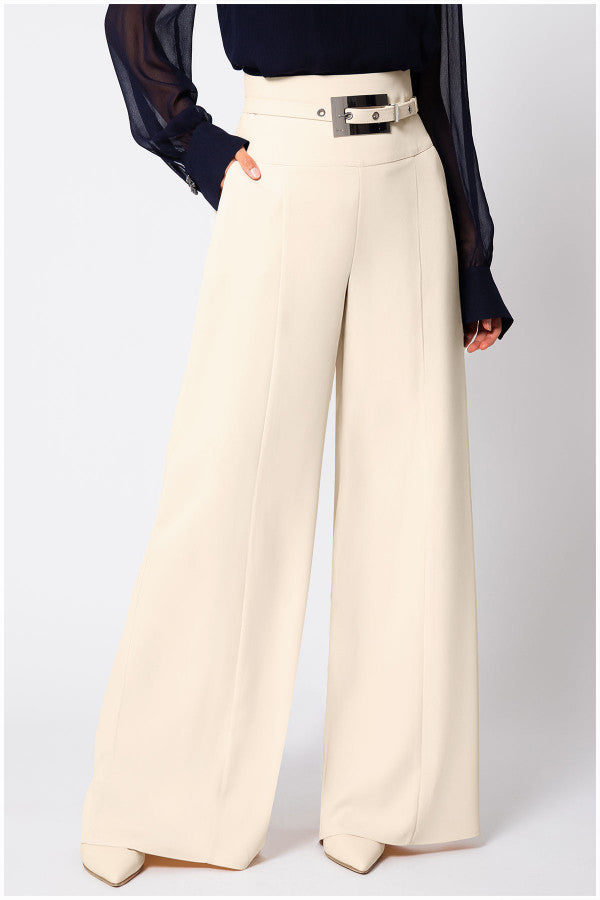
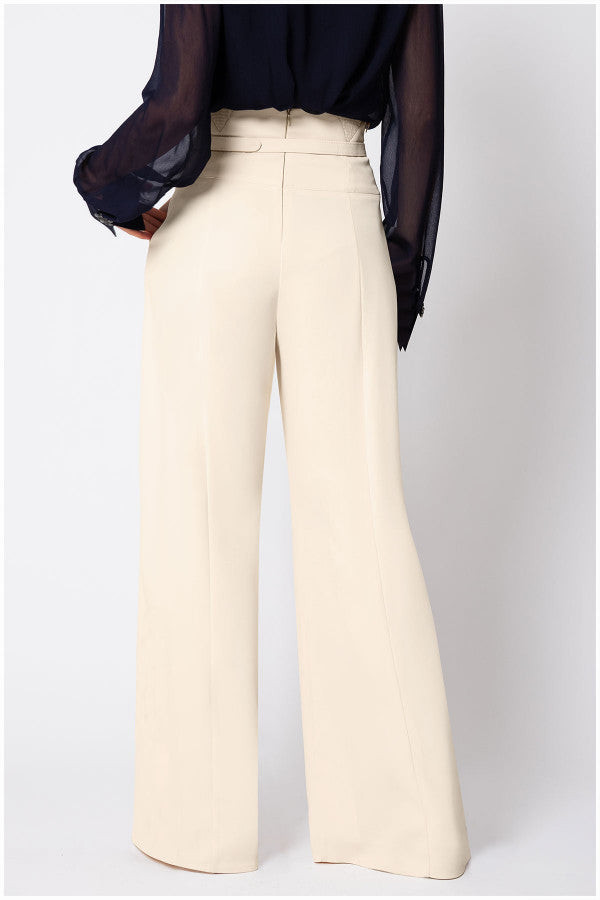
- Ivory High Waisted Wide Leg Pants, Agatha — $595
- Silver Floral Jacquard Light Coat, Emma — $880
- Teal Floral Jacquard Light Coat, Emma — $880

Explore more
Continue with our Dresses collection, or read What to Wear in Greece in Summer: Light, Clean, and Designed for Heat, How To Dress When Your Body Starts Changing Shape and What to Wear in Italy in Summer: Light, Elegant, and Made for Walking.

A short European summer wardrobe with prices
This list gives one piece for each job a European summer day asks of you, so the same few items cover the whole trip.
| The job | Luna piece | What the photo shows | Price |
|---|---|---|---|
| Daytime walking and dinner | Olga | Navy wrap dress with short sleeves, a tied belt and a knee length hem | $695 |
| Warm evenings | Amanda | Sleeveless floral midi with a draped neck and a belt | $695 |
| Airport and travel days | Teodora | Navy pull-on pants with a wide ankle | $325 |
| Pleated movement | Lola pleated skirt | Black knife pleated skirt | $325 |
| Cooler evenings | Linea | Ivory belted midi coat in technical polyester | $770 |
For more options by garment, browse the Dresses, Skirts and Light Coats collections.
More questions we hear before a summer trip
Can I wear a maxi dress for sightseeing in Europe?
You can, as long as the hem clears the ground and the fabric is light. A midi hem is easier on cobblestones and stairs, which is why the Olga and the Amanda sit at the knee or mid-calf. Keep a maxi for the evening table.
How do I stop a dress from creasing in a suitcase?
Fold it once along the waist, lay it flat on top of the other items and unpack it the same day. Fabrics that recover well, such as the viscose blend in the Olga, release most folds within an hour of hanging.