
How To Dress When Your Body Starts Changing Shape

When your body changes shape through perimenopause, postpartum, hormonal shifts, or simply the passage of time, the dressing solution is structural, not concealing. Tailored construction, defined waistlines, and intentional fabric weight do the work that styling tricks cannot.
 The body changes. This is not a marketing line. It is biological literature. According to research published in npj Aging, women's body weight increases on average until ages 55 to 59 before declining, and waist to hip ratio shifts measurably from age 40 onward. A separate clinical review in the National Library of Medicine notes that 64% of postmenopausal women show elevated waist circumference compared to 20% of premenopausal women, a redistribution from hips and thighs to the torso. Bone density loss begins around 35 at roughly 0.5% to 1.5% per year, per the National Osteoporosis Foundation, which means even posture changes.
None of this is failure. It is biology. And it is the reason the dress that worked at 32 stops working at 47, not because the woman has changed in any meaningful sense, but because the geometry has.
The fashion industry's response to this has historically been poor. The retail solution is flattering, a word doing too much work for too little, usually meaning loose, dark, and unstructured. The atelier solution is the opposite. It is more structure, not less. More tailoring, not less. More definition, not less.
This is what to actually do.
The geometry of a changing body: what is happening, in plain terms
Three structural shifts define the body change most women experience between 35 and 65.
1. Waist redistribution. The waist softens and broadens. The hip to waist ratio narrows. Pieces that previously defined the waist now sit at a higher or lower point on the torso than they did.
2. Shoulder and bust changes. The shoulder line softens. The bust often shifts in volume and position. Garments cut for a 32 year old shoulder line read differently on a 50 year old shoulder line.
3. Posture and height. Subtle compression of the spine begins, on average, around age 50. Length defining pieces, long lines, vertical seams, midi to maxi silhouettes, work harder than they did before.
Knowing this changes what you buy. It also changes how you read fit.
The five structural rules that work for a changing body
These rules work at 35, 45, 55, 65. They do not change with age. The clothing changes. The principles do not.
Rule 1. Define the waist intentionally, even if the waist has moved.
A body without a defined waistline reads larger than it is. The fix is not a tight waist. The fix is a clear waist. A wrap dress, a belted blazer, a structured midi with a seam at the natural waist, or a high rise wide leg pant all create vertical proportion. The Rina Elegant Midi Dress was designed around this principle.
Rule 2. Trust the shoulder.
A structured shoulder line creates the entire silhouette. This is why blazers transform an outfit and oversized cardigans diminish it. The Luna blazer edit, including the Rina Cropped Blazer, is built on European tailored shoulders specifically because the shoulder is the element doing the most visual work.
Rule 3. Choose fabric that holds, not fabric that drapes loosely.
Soft drapey fabrics flatter a 25 year old body and reveal every shift on a 50 year old body. Structured fabrics, silk crepe, viscose blends, mid weight cotton, knitted lace, hold their line and create a clean silhouette regardless of the body underneath. This is the engineering case for the Jody Knitwear and Lace capsule, made from botanical fiber knit and lace in our Pozarevac atelier since 1990.
Rule 4. Lengthen the line, every chance you get.
Vertical seams, long jackets, midi or maxi hemlines, monochromatic dressing, and high rise pants all add visual length. They counteract the natural compression of the spine that begins in midlife. A Jody Lace Jumpsuit creates one continuous vertical line from shoulder to floor, the most lengthening silhouette available.
Rule 5. Edit the closet down to pieces that work now, not pieces that worked then.
Most women's closets are 60% pieces from a previous body. This is not a moral problem. It is a logistical one. The solution is to keep the pieces that hold structure regardless of small fluctuations and replace the rest with versatile, well cut investments. See the elegant capsule wardrobe guide for the architecture.
Specific silhouettes that work across the change
Not every silhouette is age resilient. These five are.
• The structured midi dress with defined waist. See the Rina, Julia, and Lucy silhouettes.
• The cropped or longline tailored blazer. Over a dress, over wide leg pants, over a jumpsuit. Always doing work. See the Luna blazer edit.
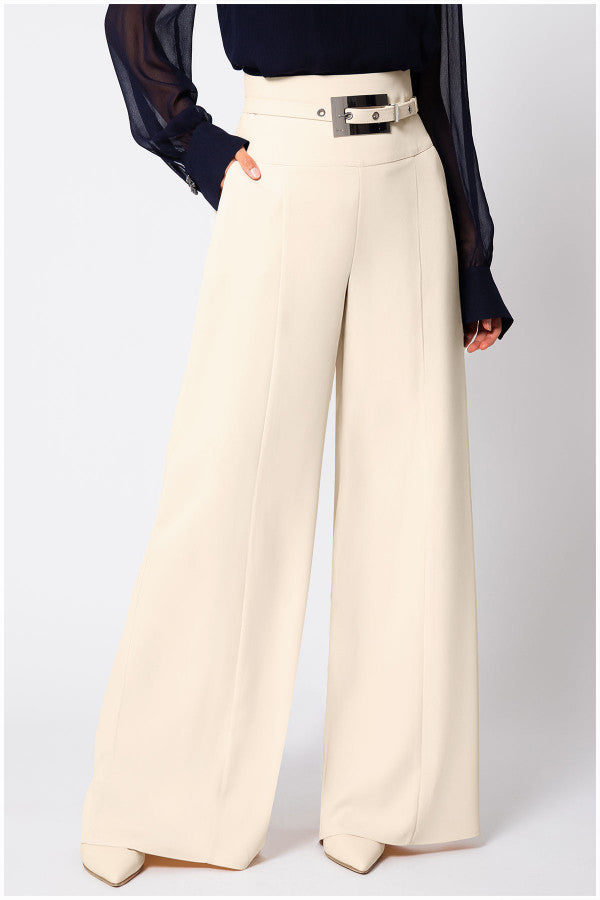
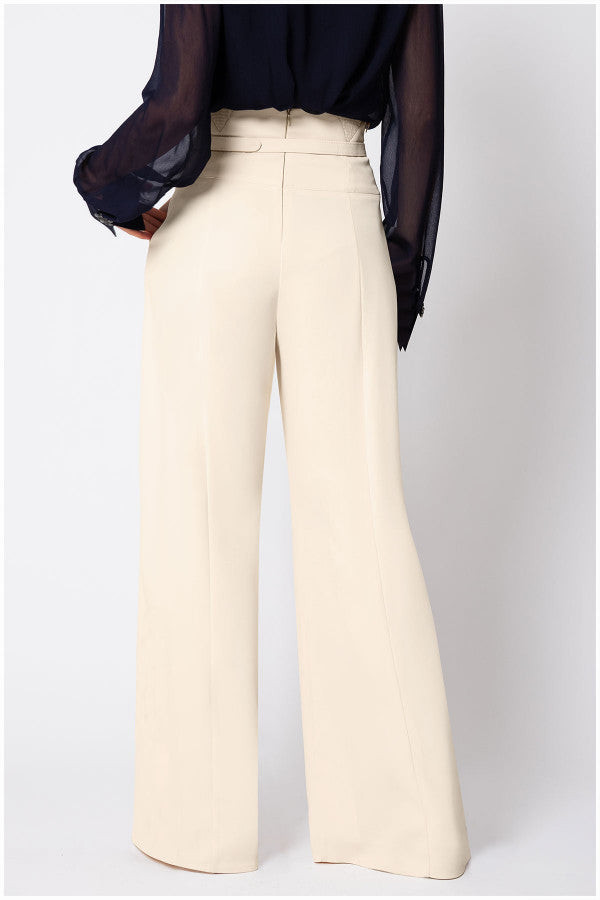
• The wide leg high rise trouser. Paired with a tucked silk blouse or a fitted knit. The Luna pants collection is cut on a high rise specifically because mid rise pants stop working when the waist moves.
• The full length jumpsuit with structured shoulder and waist seams. Aria, Tina, Jody. Does the work of an entire outfit in a single piece.
• The structured coat or trench. Covers the whole body in a single architectural line. See the Luna outerwear edit.
Silhouettes to retire from the closet
The pieces that fail a changing body, almost always, are the following.
• Bodycon dresses in stretch jersey without internal structure.
• Crop tops, even with high rise trousers. The eye reads the unbroken horizontal line as wider than it is.
• Drawstring waistlines on dress pants and skirts. They look unkempt by 4 p.m.
• Oversized sweaters without shape, particularly in light colors.
• Anything that requires a minute of mirror adjustment after every transition.
What to buy first if you are starting over
If your body has changed materially in the last 24 months and your closet is no longer working, build forward in this order.
1. One structured midi dress in a Luna neutral. Black, ivory, or midnight green. The dress that solves any unexpected event.
2. One European tailored blazer, cropped or longline, in a complementary tone.
3. One pair of wide leg high rise trousers in black or charcoal.
4. One full length jumpsuit for evening.
5. One coat or trench that covers the whole architecture.
Five pieces. Each is an investment. Each holds for a decade if cared for.
The Luna point of view on body change
We make clothing in our Pozarevac atelier for the woman whose body has changed and whose taste has not. The 35 to 55 woman who wants tailoring without trend, structure without rigidity, and clothing that respects her on the day she finds the change harder to accept and on the day she does not think about it at all. Our 180 artisans, 98% of them women, many of them in this same life stage, make every piece by hand. They know what they are making, and for whom.
This is the only way clothing built for this transition works. Because someone who has lived it, designed it.
Frequently asked questions
What is the most flattering dress style for a woman whose body has changed?
A structured midi dress with a defined waist seam, a clear shoulder line, and mid weight fabric (silk crepe, viscose blends, or mid weight cotton silk). Avoid pure jersey or unstructured drape. The Rina and Julia silhouettes are designed for this exact use.
How should I dress during perimenopause?
Prioritize structured fabrics over drape, define the waist visually rather than tightly, choose European tailored blazers over cardigans, and shift toward wide leg high rise trousers and structured midi dresses. The clinical evidence, including NIH research on midlife body composition, confirms what tailors have known for a century. Structure does what stretch cannot.
What clothes should I get rid of when my body changes?
Bodycon stretch dresses without internal structure, crop tops, drawstring waist trousers, oversized unstructured sweaters, anything requiring mid day adjustment. Keep tailored pieces, structured midi dresses, and well cut coats. These often work across multiple body shifts.
Are there brands that specifically make clothing for changing bodies over 40?
Luna Fashion House was built for this customer. The brand's primary segment is the 35 to 55 professional woman, and the cut, fabric weight, and finishing are calibrated for that body, not the 22 year old runway body. Pieces are constructed in our Pozarevac atelier, where 98% of the workforce is women, many of them in this same life stage.
What colors work best for a body that has changed?
Tonal monochromatic dressing, varying shades of one color family, visually elongates and unifies the silhouette. The Luna palette of ivory, noir, midnight green, and Bordeaux is built for this. Avoid horizontal color blocks, which read as breaks in the line.
Is it worth investing in tailoring after 50?
Yes, and arguably more so than at any earlier life stage. Tailored construction is the only reliable way to dress a body whose proportions are evolving. A well tailored dress or blazer adapts. A fast fashion piece does not. See the elegant woman's style guide for the long form view.
Continue reading
Shop the pieces in this story: Pants, Bags, and Light Coats. Complete size runs are listed first.
Find pieces designed with this in mind in the Luna Wedding Edit.
Shop the edit
Handmade in Europe in limited runs. A few pieces from our collection that suit this look:
- Ivory High Waisted Wide Leg Pants, Agatha — $595
- Structured Floral Clutch, Regina — $170
- Silver Floral Jacquard Light Coat, Emma — $880
- Teal Floral Jacquard Light Coat, Emma — $880

Explore more
Continue with our Dresses collection, or read How To Wear Polka Dot Dresses Without Looking Overdone, Spring Summer Resort Dresses That Always Look Put Together and The Travel-Ready Black Dress Capsule: From Plane to Dinner.