
7 Quiet Ways European Women Dress Differently

European women dress differently from American women in seven habits, not in seven pieces: a smaller wardrobe in better cloth, a palette of four to six colors, a tailor on speed dial, one accessory at a time, money spent on the foundation rather than the trend, clothes cared for so they last, and the same outfit worn again without apology. None of it is style. All of it can be learned, and this is how.
You are the woman who has read about “French girl style” for 20 years and still opens a closet full of clothes with nothing to wear on a Tuesday. You earn well, you are short on time, and you have stopped enjoying shopping because half of what you buy never earns its place. What you want is not a new look. It is a wardrobe that does not waste your time, and a way of dressing that reads as composed in any room you walk into. Below are the seven habits that produce that, with the exact piece from our atelier where a piece is genuinely the example.
Shop the pieces in this story: Winter Coats, Blazers, and Dresses. Complete size runs are listed first.
Luna Fashion House has cut and finished womenswear in one atelier in Pozarevac, Serbia, since 1990, and three of the same women have cut the shoulder of every Luna jacket since 2010. We are a European house dressing American women, and these seven habits are the framework we design against.
Habit 1. The wardrobe is smaller and the cloth is better
The Parisian in dark denim and a silk blouse and the Milanese in a blazer and wide trousers do not dress alike, but they buy alike: fewer pieces, in cloth that holds its shape, chosen for how they will look in the fifth winter rather than the first.
The clearest example is the coat. Most contemporary wool coats are woven at 280 to 340 grams per square meter and feel thin by January. The Nicole wool wrap coat in black is long-fiber wool at 480 grams, with horsehair canvas reinforcing the lapel, double-stitched shoulders, and a full Bemberg lining that slides over a blazer without static. It is built to be re-lined at about year four, which is the European way of saying it is expected to see year 10. On the body it has a wide collar that frames the face, a double-breasted front, a self-belt with a buckle at the natural waist, patch pockets, and a midi skirt that flares from the waist.

Once you own a coat like this you understand the habit from the inside: the weight on your shoulders is reassuring, the collar goes up against a wind without a thought, and you stop looking at coats. More on cloth weight and lining in our guide to wool winter coats by temperature.
Habit 2. Color discipline is the unspoken rule
A European wardrobe runs on four to six colors at most, nearly always deep neutrals: black, ivory, navy, charcoal, midnight green, Bordeaux, camel, soft cream. One or two accents belong to the woman, not the season. Two-color outfits beat three. Tonal beats contrasting, because the eye reads tonal as composed and contrasting as loud.
A French woman who owns three coats has them in three colors that work with every other piece she owns: black, navy, and gray. An American woman who owns six coats often has them in six colors that fragment the rest of her closet. The fix is to choose the next piece so that it goes with everything already hanging there. Our own palette of ivory, black, midnight green, and Bordeaux is that discipline applied to a whole collection.
Habit 3. Tailoring is the default, not the exception
European women buy clothes assuming the hem will be shortened and the sleeve adjusted. The piece off the rack is the starting point; the tailor is a regular appointment, not an emergency. In 35 years of fittings, the single biggest difference between a woman who looks composed and a woman who looks as if she is trying is whether the shoulder seam sits on her shoulder bone.
That is why the shoulder is where we spend the money. The Barbara tailored blazer in black is a structured twill, lined throughout, with notched lapels, a buttoned front, and flap pockets finished with a fine red line. It comes with a self-tie belt to mark the waist or leave in the drawer, it is cut to take alterations cleanly, and it comes in sizes 4 to 14, so most women need nothing more than a sleeve adjustment. It is also machine washable on a gentle cycle, air dried, and steamed on low.

A $300 dress with $40 of alterations reads better than a $600 dress worn as it came. Find a tailor within the next two weeks and take three pieces you already own.
Habit 4. One accessory at a time
One bracelet, or one bag, or one pair of earrings, almost never more than two at once. The accessory is the punctuation, not the sentence, and logos are largely absent: a European recognizes the maker by the silhouette, not the signage.
The habit works best when the garment carries its own small detail so nothing else is needed. The Lucy draped blouse in ivory is 100 percent refined technical satin with a draped neckline that falls in a soft cowl, sheer sleeves, hand-set pleats at the shoulder, and pearl accents at the cuffs. With that at the wrist, the only thing left to add is a plain earring. Under the Barbara blazer it turns a work outfit into a dinner outfit at 6 p.m., and it goes into the washing machine on gentle afterward.

Habit 5. Money on the foundation, restraint on the trend
European women spend on the structured dress, the tailored blazer, the long coat, the good trousers, and the silk blouse, and add a few inexpensive seasonal pieces on top. Americans tend to do the reverse, and the result is a closet that ages quickly.
The foundation dress is the one that fits the woman you are this year and the woman you will be in 10. The Olga wrap dress in navy is a true wrap: a notched collar, short sleeves, a belt at the waist, and a skirt that crosses over the hip and finishes at the knee. Because there is no fixed closure, the waist is marked wherever you tie it, which is why it fits at 34 and at 54, before a baby and after one, and why navy reads warmer in a photograph than black. It is the dress for the client dinner, the christening, and the anniversary, and no one at any of them will think of it as the same dress.

The rational case, since you will be asked: worn 40 times a year for five years it costs less per wear than a fast-fashion dress replaced each spring, and it is machine washable on a gentle cycle. For the fuller plan see how to build an elegant capsule wardrobe and the 10 cornerstone pieces.
Habit 6. Clothes are cared for like the investment they are
Steam, do not iron. Padded hangers, never wire. Garment bags for the off season, cedar for moths, a weekly brush for wool, and a yearly visit to the tailor for any hem showing wear. Each adds a year or two to the life of a garment, which is why a European woman spends less per year on clothes at a higher price per piece.
Our own care rule is simple. Coats are dry cleaned once a season and otherwise brushed and aired. Everything else we make, dresses, blazers, blouses, pants, and skirts, is machine washable on a gentle cycle, air dried, and steamed or ironed on low. That saves the dry cleaner’s bill and the trip, and it means you decide which detergent touches your clothes and your skin.
Habit 7. The same outfit, repeated, without apology
A European woman wears the same outfit three or four times in a month, sometimes twice in a week, and is not concerned that someone will notice. The woman who wears the same blazer to four events knows it works; the woman who needs a different outfit each time is not yet sure.
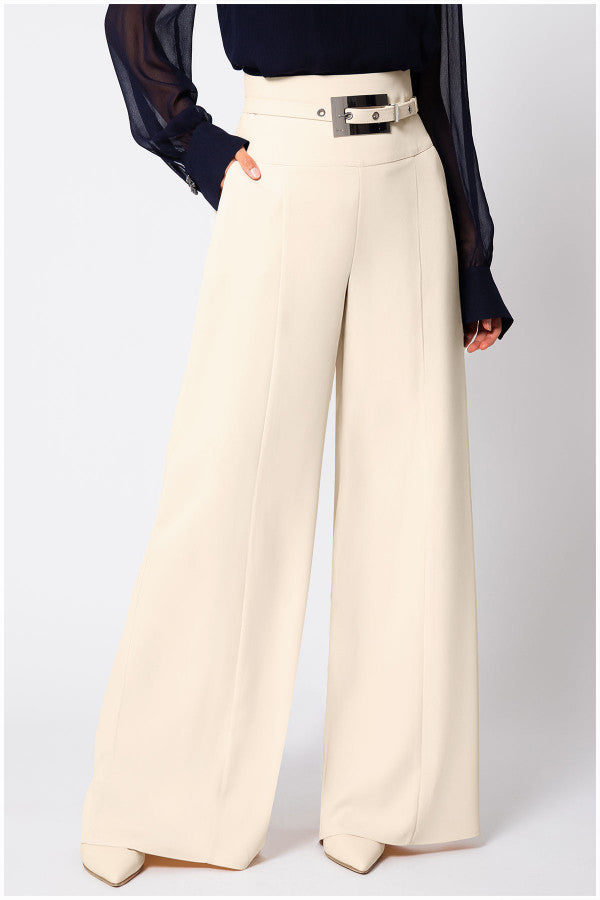
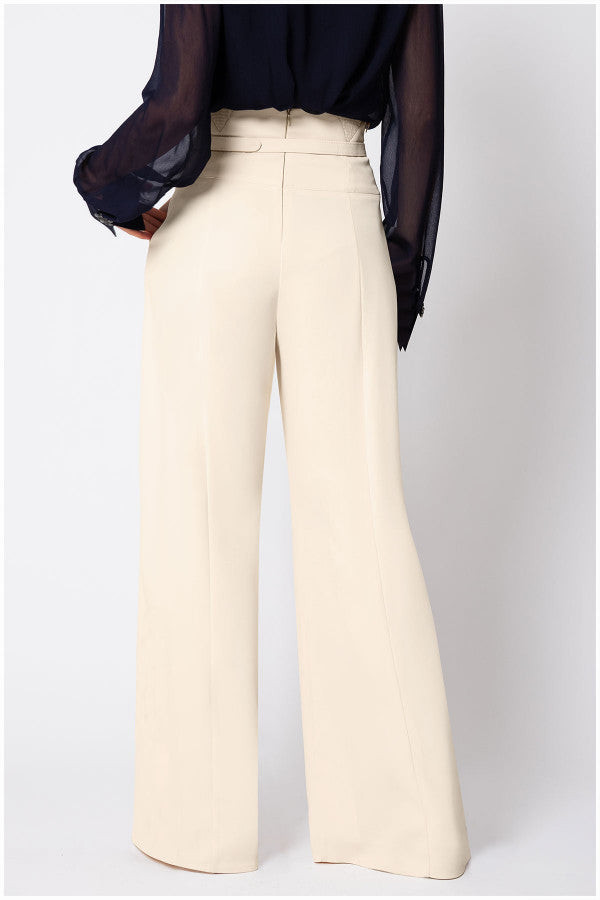
This is the hardest habit for American women to adopt and the largest unlock once adopted. Choose one piece to practice on. The Agatha high-waisted wide-leg pants in ivory are fully lined, cut with a high rise that sits at the natural waist, a pressed center crease, and an optional belt in the same ivory. Wear them Monday with the Barbara blazer, Wednesday with the Lucy blouse, and Saturday with a navy knit, and see whether anyone says a word. They run slightly generous, so take the smaller size if you are between two.

What this costs, and what it removes
Every piece above is made in small runs in our Pozarevac atelier, a few of each size, with no reorders mid-season. We make most pieces in sizes 2 to 14, ship free within the United States from California in two to five days, and take returns for 30 days with no questions asked, so trying the Barbara in two sizes and keeping one is the normal way to buy a blazer from us. Each product page carries a fit note, and the pieces that run generous say so.
What the habits remove is larger than what they cost: the Tuesday morning stare, the dress bought for one wedding, the coat that felt thin by January. A wardrobe of 15 pieces that makes 40 outfits gives you your mornings back.
Frequently asked questions
Why does European style look more refined?
Because it comes from seven habits rather than from particular pieces: a smaller wardrobe in heavier, better cloth, a palette of four to six colors, tailoring as the default, one accessory at a time, spending on foundation pieces, careful maintenance, and repeating outfits without apology. The look is the result of the habits, and every one of them can be learned in a season.
How can American women dress more like European women?
Start with three changes. Replace 10 lower-quality pieces with two foundation pieces in better cloth, such as a wool coat at 480 grams and a lined blazer. Edit your closet to four colors that work with each other and remove what falls outside them. Book a tailor within two weeks for three pieces you already own. The fourth change, repeating outfits without apology, produces the largest visible difference.
What colors do European women wear?
Deep neutrals, almost always: black, ivory, navy, charcoal, midnight green, Bordeaux, camel, and soft cream, with one or two accent colors that belong to the woman rather than the season. A wardrobe is usually built on four to six colors in total, and two-color outfits are preferred to three, because tonal dressing reads as composed.
How many pieces should a European style wardrobe have?
12 to 20 foundation pieces in a disciplined palette, plus four to eight seasonal pieces. A total wardrobe of 30 to 50 pieces is common in Europe against 100 or more in the United States. The smaller wardrobe only works because each piece is better made and fits properly, so the money goes into cloth, lining, and tailoring rather than quantity.
Is a wool coat at this price worth it compared with replacing a cheaper coat every two years?
Over 10 winters, yes. A long-fiber wool coat at 480 grams with a full lining, such as the Nicole wrap coat, holds its shape and its warmth, can be re-lined at about year four, and is dry cleaned once a season. Two or three thinner coats bought over the same decade cost about the same and look tired by their second January. Cost per wear is the arithmetic European women use.
Can I try the European approach without changing my whole wardrobe?
Yes. Choose one piece and practice the habits on it: a blazer in a color that goes with everything you own, tailored at the sleeve, worn three times in one week with different tops, and washed on a gentle cycle at home. We ship free within the United States and take returns for 30 days with no questions asked, so trying two sizes and keeping one is a normal way to begin.
Where to begin
If you buy one thing this season, make it the piece you will wear the most: the coat if you live where it is cold, the blazer if you work in rooms where you are watched, the wrap dress if your calendar is full of evenings. Choose the color that goes with everything already in your closet, and order two sizes if you are between them. Start with the winter coats or the essentials, and read how to dress when your body starts changing shape if the reason you are here is that the old clothes no longer fit the woman you are now.